Chihuahua Coat Colors
Chihuahua Coat Colors: Complete Guide to Patterns, Genetics, and Care
The Chihuahua is celebrated worldwide for its compact frame, large personality, and incredible visual diversity. When exploring chihuahua coat colors, new and prospective pet parents quickly discover one of the richest palettes in the canine kingdom. From sleek single-tone coats to intricate multi-hued markings, understanding official breed variations, coat types, and grooming requirements helps you appreciate the beauty of this iconic toy dog.
Whether you admire a striking black chihuaha, are researching a classic chihuahua brown and tan, or want to learn about the markings on a chihuahua black white or a tricolored chihuahua, this comprehensive guide explores the spectrum of chihuahuas colors, genetics, and wellness considerations.
Smooth vs. Long Coat: How Texture Affects Chihuahua Colouring
Before examining specific color patterns, it is helpful to note that chihuahua colouring appears across two distinct coat types recognized by major kennel clubs:
- Smooth Coat (Short-Haired): Features close-lying, glossy hair with a soft sheen. Colors on smooth coats often appear bold, sleek, and sharply defined.
- Long Coat: Boasts soft, fine guard hairs with feathering on the ears, legs, and tail. Long hair can give multi-colored patterns a softer, blended look.
Both varieties display the full spectrum of approved colors and patterns with equal standard recognition.
Popular and Standard Chihuahua Coat Colors
Chihuahuas showcase an extraordinary variety of combinations. Below are the most sought-after varieties found across North America:
1. Solid Colors
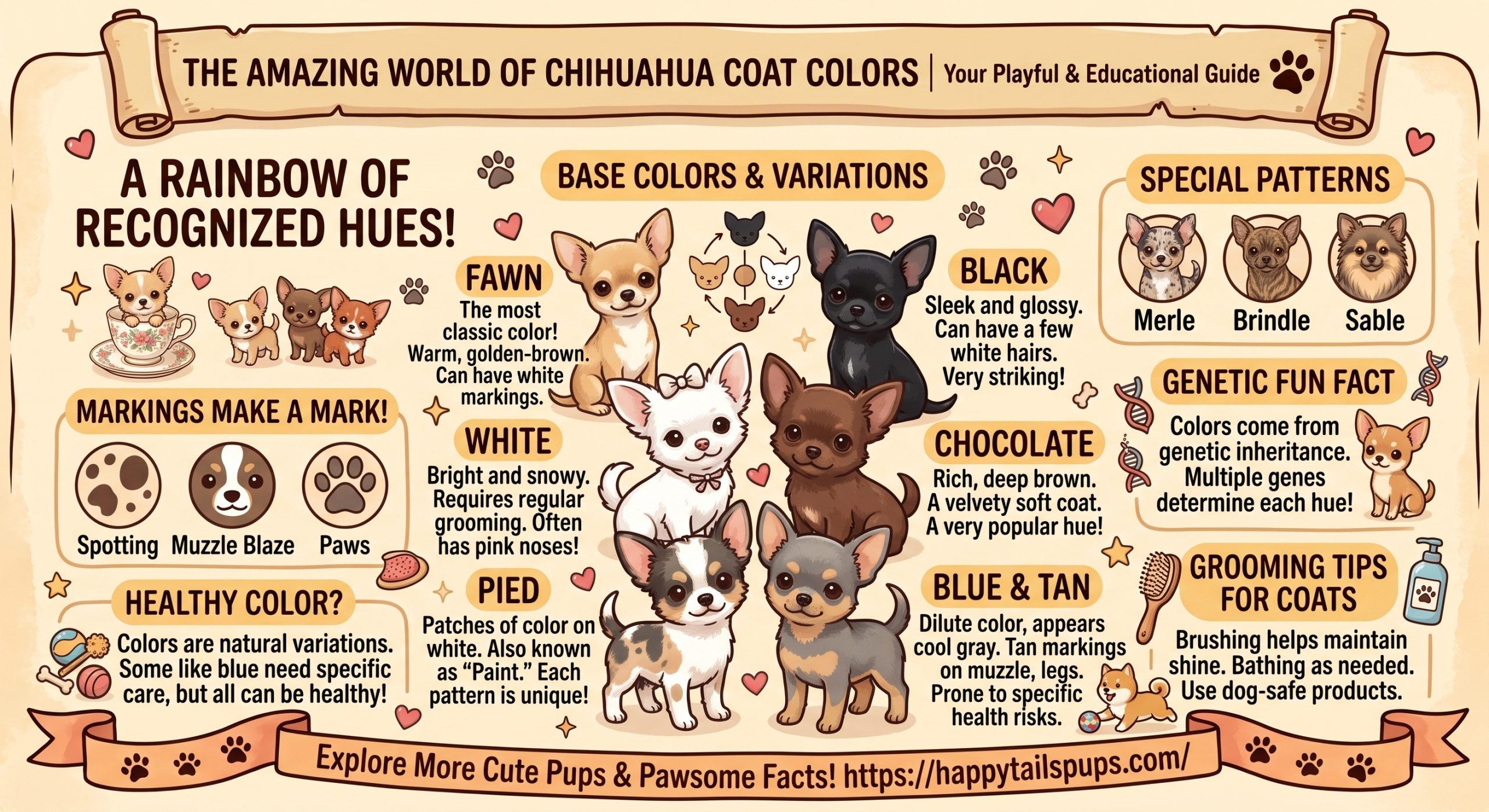
- Fawn: The most traditional and well-known Chihuahua color, ranging from soft cream and sandy gold to deep reddish-tan.
- Solid Black: A true solid black chihuaha is surprisingly uncommon, as most dark dogs carry hidden white markings on their chest, chin, or toes.
- Pure White: Completely white coats without patches, often paired with dark eyes and black noses.
- Chocolate: A rich, deep brown coat resulting from recessive gene interactions.
2. Bi-Color Combinations
- Chihuahua Black White: Characterized by a high-contrast blend, frequently displaying a black base coat with white blazes on the chest, paws, and face.
- Chihuahua Brown and Tan: A timeless pattern with a deep chocolate or dark base contrasted with warm tan points above the eyes, on the muzzle, and on the lower legs.
- Fawn and White: A soft golden base accented with crisp white markings across the underbelly and neck.
3. Tricolor and Multi-Colored Patterns
- Tricolored Chihuahua: A vibrant mix incorporating three distinct shades—most often black, tan, and white. These dogs typically feature a black saddle or body, tan points on the cheeks and brows, and clean white chests and socks.
- Brindle: A subtle or bold “tiger-stripe” pattern overlaying a lighter fawn, red, or gold base.
- Sable: Fawn or red hair tipped with dark brown or black, creating depth and dimension across the dog’s back and shoulders.
Genetics, Color Dilution, and Health Considerations
While most chihuahuas colors are purely cosmetic, prospective owners should understand how certain color genes interact with canine health:
- Merle Patterns: The merle gene produces mottled patches of color and blue or marbled eyes. Responsible breeders avoid breeding two merle dogs together, as double-merle pairings can result in congenital deafness, microphthalmia, and vision impairment.
- Color Dilution Alopecia (CDA): Unusually diluted shades (such as blue or lilac) can occasionally be accompanied by follicular dysplasia, causing dry skin or patchy hair loss. Choosing an ethical breeder who screens genetic lines prevents inherited coat disorders.
- Sun Protection: Dogs with lighter coat pigments or pink skin around the nose and ears require sun protection during bright summer months to prevent sunburn.
For clinical overviews on coat genetics, preventive veterinary protocols, and dermatological care for toy dogs, consult the expert pet library at VCA Animal Hospitals.
Daily Grooming and Coat Maintenance
Keeping your Chihuahua’s coat healthy and vibrant requires a straightforward care routine:
- Brushing Routine: Smooth-coat Chihuahuas benefit from weekly brushing with a soft bristle brush or rubber grooming mitt to remove loose hairs. Long-coat varieties require gentle brushing 2 to 3 times per week with a pin brush to prevent matting behind the ears and under the legs.
- Bathing: Bathe your dog every 4 to 6 weeks using a gentle, hypoallergenic dog shampoo to protect the coat’s natural moisture barrier.
- Skin & Coat Nutrition: Feed a high-protein diet enriched with omega-3 and omega-6 fatty acids to maintain coat luster and skin hydration.
Finding Healthy Chihuahuas from Ethical Breeders
Regardless of which color pattern you prefer, health, temperament, and ethical breeding practices should always take priority over rare coat trends. High-volume commercial sellers sometimes market uncommon colors at extreme markups while cutting corners on genetic health evaluations and veterinary care.
When you adopt or purchase through Happy Tails Pups, you are connected with dedicated breeders who place welfare first. Every puppy receives comprehensive veterinary physical examinations, up-to-date core vaccinations, microchipping, and a written health guarantee before joining their new home across the United States or Canada.
Frequently Asked Questions
1. What is the most common Chihuahua coat color?
Fawn is the most widespread and recognized Chihuahua color, though black and tan, chocolate, and cream variations are also very common.
2. What markings appear on a tricolored chihuahua?
A typical tricolored chihuahua features three distinct colors—usually a primary black base, warm tan accent points on the face and eyebrows, and clean white patches on the chest and feet.
3. Are pure black Chihuahuas rare?
Yes, completely solid black Chihuahuas without any stray white hairs, tan points, or undertones are relatively rare compared to bi-color combinations.
4. Does coat color affect a Chihuahua’s temperament?
No, coat color has no documented impact on a dog’s personality. Temperament is shaped by genetics, early parental socialization, and training.
5. Do different Chihuahua coat colors require different grooming?
The grooming routine depends on coat length (smooth vs. long) rather than color. However, white or pale coats may need more frequent facial wipe-downs to prevent noticeable tear staining.
6. What is the difference between a Chihuahua black white and black and tan?
A black and white dog features dark pigment paired with clear white patches, whereas a black and tan dog displays defined reddish-gold points above the eyes, on the muzzle, and on the legs.
7. Where can I find ethically raised Chihuahua puppies with diverse coat colors?
You can explore verified, health-tested litters and arrange safe pet travel throughout the US and Canada by visiting Happy Tails Pups.