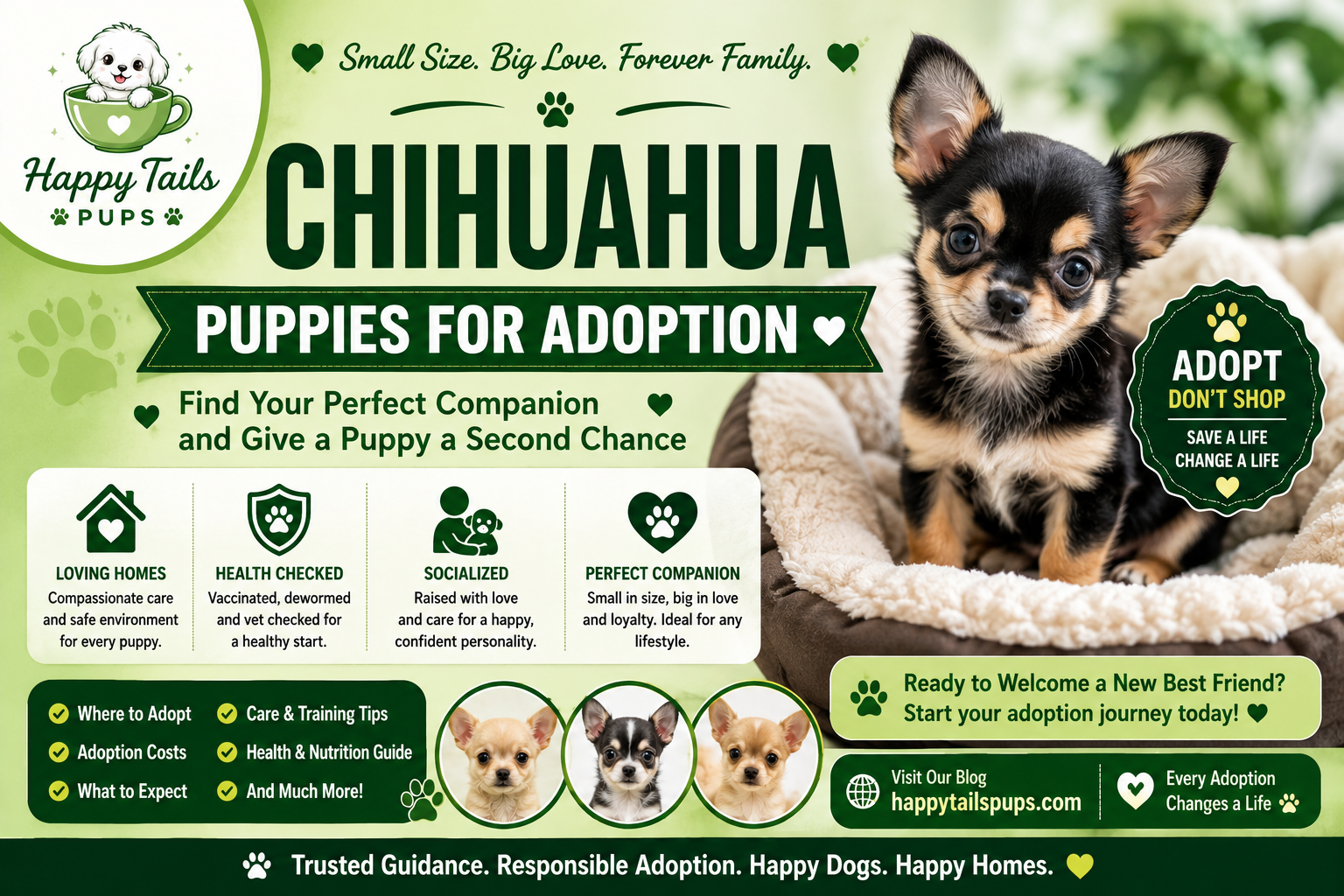
Chihuahua Puppies for Adoption
Chihuahua Puppies for Adoption 2026
If you’re searching for Chihuahua puppies for adoption, you’re likely hoping to welcome a small, affectionate companion into your family while giving a deserving puppy a loving forever home. Chihuahuas remain one of the most popular toy breeds because they combine a compact size with remarkable intelligence, confidence, and loyalty. Whether you live in an apartment, a suburban home, or simply want a companion that’s easy to travel with, a Chihuahua can be an excellent choice. However, successful adoption begins long before bringing a puppy home. Understanding where to adopt, how to recognize a healthy puppy, what questions to ask, and how to prepare your home will help you make an informed decision. With careful planning and realistic expectations, adopting a Chihuahua puppy can become one of the most rewarding experiences for both you and your new companion.
Why More Families Are Adopting Chihuahua Puppies
More families are choosing adoption because it provides puppies with a second chance while allowing responsible owners to welcome a loving companion into their lives. Many Chihuahua puppies enter adoption programs due to unexpected changes in their previous owners’ circumstances rather than behavioral or health problems.
Their small size, affectionate personality, and adaptability make them suitable for many different lifestyles. They often bond closely with their owners, enjoy spending time with people, and require less living space than many larger breeds.
Another advantage is that many adoption organizations provide veterinary examinations, vaccinations, deworming, and health evaluations before puppies are placed in new homes, helping families begin with a healthy foundation.
Where to Find Chihuahua Puppies for Adoption
Finding the right Chihuahua puppy starts with choosing reputable adoption sources. Taking time to research organizations greatly increases the likelihood of finding a healthy puppy that matches your family’s lifestyle.
Local Animal Shelters
Many local shelters care for Chihuahua puppies and young adult dogs throughout the year. Shelter staff often evaluate each dog’s temperament, health, and behavior, making it easier to identify puppies that fit different family situations.
Breed-Specific Chihuahua Rescue Organizations
Breed-specific rescues focus entirely on Chihuahuas and Chihuahua mixes. Volunteers often know each puppy’s personality, medical history, and care requirements, allowing them to recommend appropriate matches.
Responsible Adoption Programs
Some organizations place puppies in foster homes before adoption. Foster families observe daily behavior, helping future owners understand the puppy’s personality, energy level, and adjustment needs before adoption is finalized.
How Much Does Chihuahua Puppy Adoption Cost?
One of the most common questions people ask is how much Chihuahua adoption costs. Adoption fees vary depending on the organization, the puppy’s age, medical care received, and your location.
Many adoption fees help cover:
- Veterinary examinations
- Vaccinations
- Deworming treatments
- Microchipping
- Spaying or neutering when age appropriate
- Foster care expenses
- Daily food and care
Rather than focusing only on the adoption fee, consider the overall value of adopting a puppy that has already received important preventive healthcare.
How to Choose the Right Chihuahua Puppy
Every Chihuahua has its own personality, so selecting the right puppy involves much more than appearance.
Personality
Observe how the puppy responds to people and new environments. A confident puppy is usually curious, playful, and comfortable exploring while interacting positively with people.
Health
Healthy puppies should have:
- Bright eyes
- Clean ears
- Healthy skin
- Soft coat
- Good appetite
- Comfortable movement
Ask for veterinary records whenever possible.
Activity Level
Some Chihuahua puppies are naturally energetic, while others have calmer personalities. Choosing a puppy whose energy level matches your household often leads to a smoother adjustment.
Questions Every Adopter Should Ask
Before completing an adoption, ask questions that help you understand the puppy’s background.
Helpful questions include:
- Has the puppy received veterinary care?
- Is the puppy vaccinated?
- Has the puppy been dewormed?
- Has the puppy lived with children?
- Has the puppy interacted with other pets?
- What food is the puppy currently eating?
- Are there any known health concerns?
Responsible organizations appreciate informed adopters and willingly answer these questions.
Preparing Your Home Before Adoption
Preparing ahead of time makes your puppy’s transition much less stressful.
Gather essential supplies including:
- Comfortable puppy bed
- Small-breed puppy food
- Food and water bowls
- Adjustable harness
- Lightweight leash
- Puppy crate
- Interactive toys
- Grooming supplies
- Identification tag
A quiet sleeping area also helps your Chihuahua feel secure while becoming familiar with its new surroundings.
The First 30 Days After Bringing Your Chihuahua Puppy Home
The first month after adoption is one of the most important stages in your puppy’s life. Everything is new, including the environment, routines, sounds, and people. Giving your Chihuahua time to adjust while maintaining a consistent daily schedule helps build confidence and trust.
During the first few days, keep introductions calm and avoid overwhelming your puppy with too many visitors or unfamiliar places. Establish regular feeding times, potty breaks, play sessions, and bedtime routines. Predictable schedules help puppies feel secure and make house training much easier.
It’s also a good idea to schedule a wellness examination with your veterinarian soon after adoption. This visit confirms your puppy’s overall health and provides an opportunity to discuss vaccinations, parasite prevention, nutrition, and future healthcare.
Feeding Your Chihuahua Puppy for Healthy Growth
Proper nutrition supports healthy bones, muscles, brain development, and immune function. Chihuahua puppies have fast metabolisms, so they benefit from eating a balanced puppy food formulated specifically for small breeds.
Feed your puppy according to your veterinarian’s recommendations and maintain the same food during the first several days after adoption. If you decide to change foods later, introduce the new diet gradually over several days to avoid digestive upset.
Fresh drinking water should always be available, and treats should be used as rewards during training rather than replacing balanced meals.
Potty Training Your Chihuahua Puppy
House training requires patience, consistency, and positive reinforcement. Chihuahua puppies learn best when they follow a predictable schedule.
Take your puppy outside:
- First thing every morning
- After meals
- After naps
- After playtime
- Before bedtime
Reward successful potty trips immediately with praise or a small treat. Avoid punishment for accidents, as it may create confusion or anxiety. Instead, calmly clean accidents and continue reinforcing the desired behavior.
Many Chihuahua owners also use crate training as part of the house-training process because it encourages puppies to develop good bathroom habits while providing a safe resting space.
Socializing Your Chihuahua
Early socialization helps puppies grow into confident, well-adjusted adult dogs. Positive experiences during the first several months of life influence how your Chihuahua responds to people, other pets, and new environments.
Gradually introduce your puppy to:
- Family members
- Friendly visitors
- Different walking surfaces
- Household sounds
- Safe outdoor environments
- Other vaccinated, well-behaved dogs
Always keep these experiences positive and allow your puppy to explore at its own pace. Gentle encouragement builds confidence without creating unnecessary stress.
Common Health Concerns to Watch For
Although many Chihuahua puppies grow into healthy adults, routine veterinary care remains essential throughout life.
Owners should monitor for:
- Changes in appetite
- Vomiting or diarrhea
- Persistent coughing
- Eye or ear discharge
- Difficulty walking
- Unusual tiredness
- Changes in behavior
Scheduling regular wellness examinations helps identify potential concerns early while supporting long-term health.
Preventive healthcare—including vaccinations, parasite prevention, dental care, and proper nutrition—plays an important role in helping your Chihuahua live a long, healthy life.
Grooming and Everyday Care
Chihuahuas are relatively easy to groom compared to many long-coated breeds, but regular care still helps keep them healthy and comfortable.
Short-coated Chihuahuas benefit from weekly brushing to remove loose hair and keep the coat clean. Long-coated Chihuahuas usually require more frequent brushing to prevent tangles around the ears, chest, legs, and tail.
Routine grooming should also include:
- Nail trimming
- Ear inspections
- Dental care
- Coat brushing
- Skin checks
Starting these routines early helps puppies become comfortable with handling throughout adulthood.
New Chihuahua Puppy Checklist
Before bringing your puppy home, make sure you have everything ready.
Essential supplies include:
- Comfortable bed
- Small-breed puppy food
- Food and water bowls
- Adjustable harness
- Lightweight leash
- Puppy crate
- Soft blanket
- Chew toys
- Grooming brush
- Nail trimmer
- Puppy shampoo
- Identification tag
- Enzyme cleaner for accidents
Being prepared allows you to focus on helping your new companion settle into its forever home.
Adoption or Buying From a Responsible Breeder?
Many families wonder whether adoption or purchasing from a breeder is the better choice. The answer depends on your goals and circumstances.
Adoption is a wonderful option for families who want to provide a loving home to a puppy in need. Many adopted Chihuahuas become loyal companions and thrive with proper care, training, and patience.
Purchasing from a responsible breeder may be appropriate for buyers seeking a puppy with documented health history, carefully planned breeding, and known parentage. Ethical breeders invest significant time in health testing, early socialization, and lifelong support for puppy owners.
Regardless of your decision, always choose organizations that prioritize the health and welfare of their dogs.
Continue Learning About Chihuahua Care
Learning about your Chihuahua’s health, nutrition, behavior, and training helps you become a more confident owner. Reliable, veterinarian-reviewed information can guide you through every stage of your dog’s life. For trusted educational resources on Chihuahua care and responsible pet ownership, visit VCA Animal Hospitals Pet Care Library: https://vcahospitals.com/know-your-pet.
Final Thoughts
Searching for Chihuahua puppies for adoption is about much more than finding an available puppy. It’s about choosing a companion that matches your lifestyle and preparing to provide a safe, loving, and permanent home. By researching adoption organizations, asking thoughtful questions, understanding your puppy’s needs, and preparing your home before adoption day, you’ll create the foundation for a successful lifelong relationship. Whether you’re adopting your first Chihuahua or adding another member to your family, patience, consistency, and responsible care will help your new companion thrive. If you’re interested in learning more about Chihuahua care, puppy development, responsible breeding, and helpful ownership tips, visit Happy Tails Pups at https://happytailspups.com/ for additional educational resources.
Frequently Asked Questions
1. Where can I find Chihuahua puppies for adoption?
You can begin with local animal shelters, breed-specific Chihuahua rescue organizations, and reputable adoption programs that carefully evaluate each puppy before placement.
2. How much does it cost to adopt a Chihuahua puppy?
Adoption fees vary by organization and often include veterinary care, vaccinations, deworming, microchipping, and sometimes spaying or neutering.
3. Are Chihuahua puppies good for first-time owners?
Yes. With proper training, early socialization, and consistent care, Chihuahua puppies can be wonderful companions for first-time dog owners.
4. How long does it take a Chihuahua puppy to adjust to a new home?
Most puppies begin adjusting within a few weeks, although every dog adapts at its own pace depending on its background and personality.
5. Should I adopt a puppy or an adult Chihuahua?
Both are excellent options. Puppies require more training, while adult Chihuahuas often have established personalities that make choosing the right companion easier.
6. What should I do before bringing my Chihuahua puppy home?
Prepare your home with essential supplies, schedule a veterinary appointment, establish a daily routine, and create a quiet, comfortable space where your puppy can feel safe.