
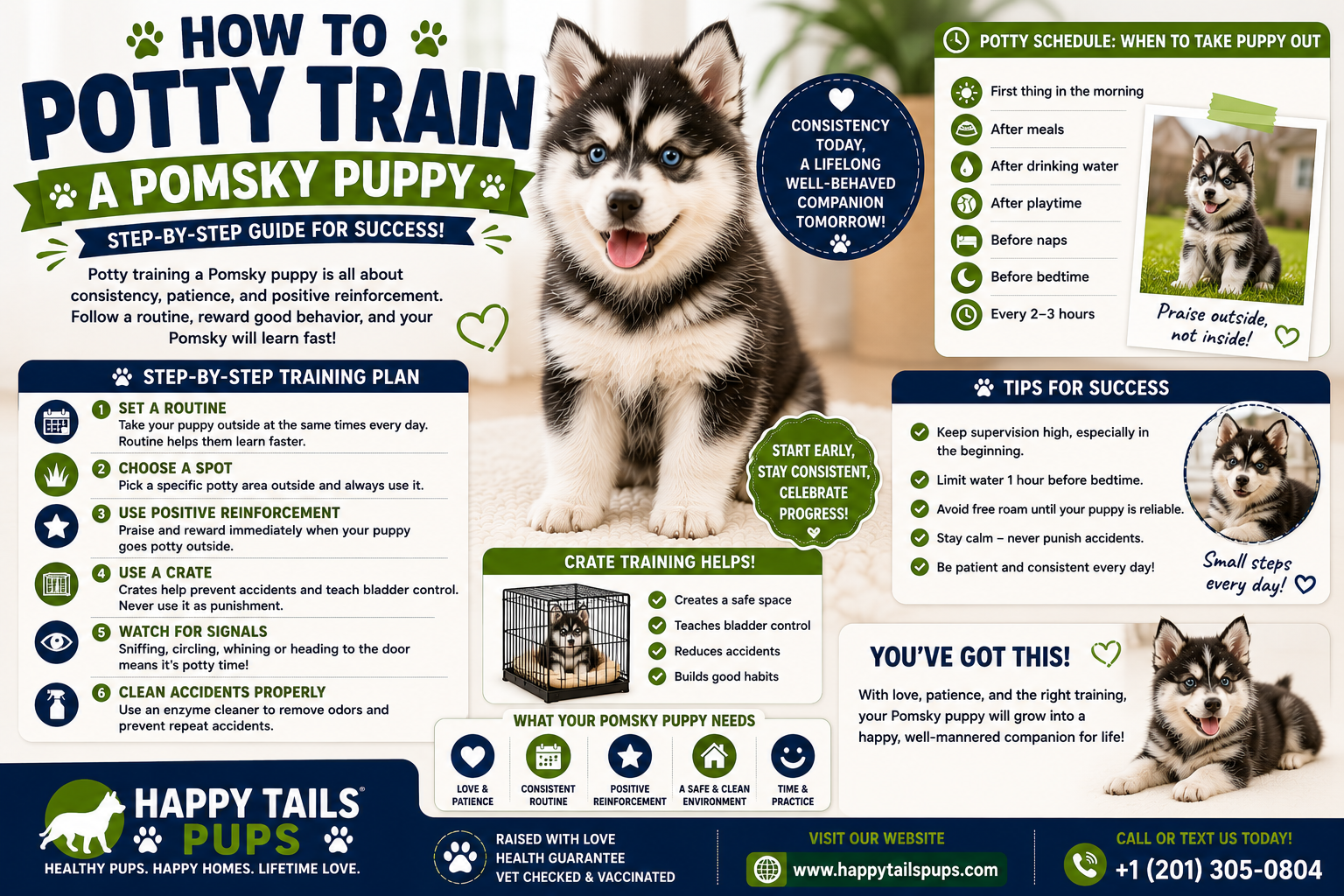
How to Potty Train a Pomsky Puppy
How to Potty Train a Pomsky Puppy
Potty training is one of the first and most important lessons every Pomsky puppy must learn. If you’re wondering how to potty train a Pomsky puppy, the good news is that Pomskies are intelligent dogs that typically learn house rules quickly when training is consistent and positive. As a mix between the Siberian Husky and the Pomeranian, Pomskies are smart, eager to please, and capable of developing excellent bathroom habits early in life. Most Pomsky puppies can begin learning potty routines as soon as they arrive home. The key to successful potty training is consistency, patience, supervision, and establishing a predictable schedule. By following a structured routine and rewarding good behavior, most owners can significantly reduce accidents and help their Pomsky puppy become reliably house-trained within a few months.
Why Potty Training Is Important for Pomsky Puppies
Potty training helps establish healthy habits that will benefit your Pomsky throughout its life.
A properly house-trained Pomsky:
- Understands household rules
- Develops confidence
- Builds trust with owners
- Experiences fewer accidents
- Adjusts more easily to family life
Starting training early often produces the best results.
When Should You Start Potty Training a Pomsky Puppy?
Potty training should begin immediately after bringing your puppy home.
Most Pomsky puppies are ready to start learning at:
- 8 weeks old
- 9 weeks old
- 10 weeks old
- 12 weeks old
Young puppies learn routines quickly when expectations remain consistent.
Why Early Training Matters
Early training helps:
- Prevent bad habits
- Create predictable routines
- Improve long-term success
- Build confidence
The sooner training begins, the easier the process often becomes.
Understanding Your Pomsky Puppy’s Bathroom Schedule
One of the biggest mistakes new owners make is expecting puppies to “hold it” for long periods.
Young Pomskies need frequent bathroom breaks.
Typical Potty Times
Take your puppy outside:
- Immediately after waking up
- After meals
- After drinking water
- After play sessions
- Before bedtime
- Every few hours during the day
Frequent opportunities help reduce indoor accidents.
Create a Consistent Potty Training Routine
Pomskies thrive on structure and routine.
Example Daily Schedule
Morning
- Wake up
- Immediately go outside
- Reward successful potty behavior
After Breakfast
- Take puppy outside within 10–15 minutes
Midday
- Scheduled potty break
- Supervised playtime
Evening
- Potty break after dinner
- Final bathroom trip before bed
Consistency helps puppies understand expectations faster.
Choose a Designated Potty Area
Using the same location each time helps reinforce potty habits.
Benefits of a Designated Spot
Your Pomsky learns:
- Where bathroom behavior is expected
- Familiar scents
- Routine associations
Many puppies begin eliminating more quickly when using the same area consistently.
Use Positive Reinforcement
Positive reinforcement is one of the most effective potty training methods.
Reward Desired Behavior
When your Pomsky successfully goes potty outside:
- Offer praise immediately
- Give a small treat
- Use a consistent phrase
Examples include:
- “Good potty!”
- “Great job!”
- “Good puppy!”
Immediate rewards help puppies connect actions with outcomes.
Why Crate Training Helps Potty Training
Crate training is often one of the fastest ways to house-train a Pomsky puppy.
Benefits of Crate Training
Crates help:
- Reduce accidents
- Encourage bladder control
- Create a safe sleeping area
- Establish routines
Most puppies naturally avoid soiling their sleeping space.
Choosing the Right Crate
The crate should be:
- Comfortable
- Secure
- Large enough to stand and turn around
- Not excessively large
A properly sized crate improves training effectiveness.
Watch for Potty Signals
Pomsky puppies often show signs before needing to eliminate.
Common Signs Include
- Sniffing the floor
- Circling
- Whining
- Restlessness
- Walking toward doors
Recognizing these signals allows owners to prevent accidents.
How to Handle Accidents
Accidents are a normal part of potty training.
What to Do
If an accident occurs:
- Stay calm
- Clean thoroughly
- Continue training
What Not to Do
Avoid:
- Yelling
- Punishment
- Physical correction
Harsh responses can create fear and confusion.
Cleaning Accidents Properly
Residual odors may encourage repeat accidents.
Best Cleaning Practices
Use:
- Pet-safe cleaners
- Enzyme-based odor removers
- Thorough cleaning methods
Removing scent markers reduces repeat incidents.
How Long Does It Take to Potty Train a Pomsky?
Every puppy learns at a different pace.
Average Potty Training Timeline
Many Pomskies show significant progress within:
- A few weeks
Most become reliably house-trained within:
- 3 to 6 months
Consistency remains the most important factor.
Common Potty Training Mistakes
Avoiding mistakes can speed up success.
Frequent Errors
- Inconsistent schedules
- Too much unsupervised freedom
- Missing potty signals
- Delayed rewards
- Punishing accidents
Correcting these issues often improves results quickly.
Nighttime Potty Training Tips
Young puppies often need nighttime bathroom breaks.
Helpful Strategies
- Limit water shortly before bed
- Take puppy out before sleeping
- Set overnight alarms if needed
As puppies mature, nighttime breaks become less frequent.
Potty Training in Apartments
Many Pomsky owners live in apartments.
Apartment Training Tips
- Use consistent outdoor routes
- Create regular schedules
- Increase supervision
- Use elevators promptly
Apartment living may require additional planning but remains very manageable.
Signs Your Pomsky Is Fully Potty Trained
A fully house-trained Pomsky generally:
- Asks to go outside
- Rarely has accidents
- Follows a routine
- Demonstrates reliable bladder control
These milestones indicate successful training.
Additional Training Beyond Potty Training
Once potty training is established, owners can focus on:
- Basic obedience
- Leash training
- Socialization
- Crate training
- Advanced commands
Pomskies are highly intelligent and often enjoy learning new skills.
Choosing a Healthy Pomsky Puppy
Successful training begins with a healthy and well-socialized puppy.
Responsible breeders often provide:
- Health records
- Vaccination schedules
- Early socialization
- Ongoing support
A confident puppy often adapts to training more easily
Where to Find Healthy Pomsky Puppies
If you’re looking for a healthy Pomsky puppy raised with proper care and early socialization, choosing a trusted breeder is essential.
Visit Happy Tails Pups to explore available Pomsky puppies, breeder information, and helpful puppy care resources.
FAQs:
1. At what age should I start potty training a Pomsky puppy?
Most owners begin potty training immediately when their puppy arrives home, usually around 8 to 12 weeks of age.
2. Are Pomskies easy to potty train?
Yes. Pomskies are intelligent dogs and often learn quickly when training is consistent and positive.
3. How long does potty training take?
Most Pomskies show strong progress within a few weeks and become reliably house-trained within 3 to 6 months.
4. Should I use a crate when potty training?
Yes. Crate training is one of the most effective tools for housebreaking a Pomsky puppy.
5. What should I do if my Pomsky keeps having accidents?
Review your schedule, increase supervision, watch for potty signals, and continue using positive reinforcement consistently.