Are Teacup Puppies Real?
Are Teacup Puppies Real?
If you have spent any time researching tiny companion dogs online, you have likely encountered the term “teacup puppy.” These exceptionally small dogs have captured the hearts of pet lovers worldwide thanks to their adorable appearance, compact size, and affectionate personalities. Yet despite their popularity, many prospective owners still wonder whether teacup puppies are actually real or simply a marketing term used by breeders and pet websites. The answer is a little more complex than a simple yes or no.
As a breeder, one of the most common questions I hear from first-time puppy owners is whether a teacup puppy is an officially recognized breed. Many people assume that a Teacup Yorkie, Teacup Maltipoo, or Teacup Pomeranian belongs to a separate breed category. In reality, teacup puppies are very real dogs, but the term “teacup” refers to size rather than breed classification. These puppies are typically much smaller than the average dog within their breed and are often bred from naturally petite bloodlines.
Understanding what the term truly means is important because it helps buyers make informed decisions and avoid misconceptions. Whether you are interested in a Teacup Maltipoo, Teacup Yorkie, Teacup Chihuahua, Teacup Pomeranian, Teacup Bichon Frise, or Teacup Poodle, knowing how these tiny companions are developed, what health considerations may exist, and how to identify responsible breeding practices can help ensure a positive ownership experience. Families searching for healthy, well-socialized puppies can also learn more through Happy Tails Pups by visiting https://happytailspups.com/.
Are Teacup Puppies Officially Recognized?
One of the biggest misconceptions surrounding teacup puppies is the belief that they are recognized as a separate breed by major kennel organizations. While the term is extremely popular among dog enthusiasts and breeders, organizations such as the American Kennel Club (AKC) do not officially recognize “teacup” as a breed category. Instead, kennel clubs recognize established breeds such as the Yorkshire Terrier, Pomeranian, Chihuahua, Maltese, Toy Poodle, and Bichon Frise. A puppy marketed as a Teacup Yorkie remains a Yorkshire Terrier, while a Teacup Chihuahua remains a Chihuahua according to official breed standards.
This distinction is important because buyers often focus heavily on the teacup label without fully understanding what it represents. The term simply indicates that the puppy is expected to mature at a significantly smaller size than what is considered average for the breed. Responsible breeders generally use the term as a size descriptor rather than a breed designation. When evaluating a puppy, factors such as health testing, genetics, temperament, and proper socialization are far more important than the label itself.
What the Major Kennel Clubs Say
Major kennel organizations establish breed standards that define the ideal appearance, temperament, and size of recognized breeds. While these organizations acknowledge toy-sized breeds, they do not maintain separate categories for teacup varieties. As a result, there is no official registration category for Teacup Pomeranians, Teacup Yorkies, or Teacup Maltipoos. Prospective owners should understand that the teacup label is commonly used within the pet industry to help describe a dog’s anticipated adult size rather than its breed identity. This understanding can help buyers focus on responsible breeding practices rather than marketing terminology.
How Are Teacup Puppies Created?
The tiny size associated with teacup puppies is generally achieved through selective breeding over multiple generations. Contrary to some myths, teacup puppies are not created through any unusual process or scientific intervention. In most cases, breeders identify healthy adult dogs that naturally fall on the smaller end of the breed standard and incorporate those dogs into carefully planned breeding programs. Over time, this selective approach can produce offspring that consistently mature into smaller adults while maintaining desirable breed characteristics.
Responsible breeding requires balancing size with overall health. Ethical breeders understand that producing healthy puppies should always take priority over achieving an extremely small adult size. The healthiest teacup puppies are typically the result of generations of thoughtful breeding decisions that focus on temperament, structure, longevity, and genetic health.
Breeding Smaller Dogs
Selective breeding remains the most common method used to produce teacup-sized puppies. Breeders often select naturally smaller adults that demonstrate excellent health, sound structure, and stable temperaments. By pairing these dogs over several generations, it is sometimes possible to produce puppies that mature into significantly smaller adults while still exhibiting the characteristics that make the breed desirable. This process requires patience and experience because size alone should never be the primary goal.
Genetic Variation
Nature also plays an important role in determining size. Within many litters, some puppies are naturally smaller than their siblings. These puppies may eventually mature into adults that fit the teacup description. Genetics can influence growth patterns in complex ways, which is why experienced breeders rely on bloodline history and parental traits when estimating adult size. Although size predictions can be fairly accurate, no breeder can guarantee an exact adult weight because genetics remain unpredictable.
Crossbreeding
Some teacup puppies are produced through carefully planned designer dog breeding programs. The Teacup Maltipoo, for example, combines the intelligence of the Toy Poodle with the affectionate personality of the Maltese. By selecting smaller parent dogs from each breed, breeders may produce puppies that mature into exceptionally small companions. Successful crossbreeding focuses on improving overall health, maintaining desirable personality traits, and creating well-rounded family pets rather than simply producing the smallest puppies possible.
Why Are Teacup Puppies So Popular?
Few categories of dogs have experienced the level of popularity that teacup puppies enjoy today. Their appeal extends across age groups, lifestyles, and geographic locations. From busy professionals living in city apartments to retirees seeking a loving companion, many people are drawn to the unique qualities that these tiny dogs offer. Their small size, adorable appearance, and adaptable nature have made them one of the most searched puppy categories online.
Social media has also contributed significantly to the growing demand for teacup puppies. Photos and videos featuring tiny dogs often attract millions of views, introducing these breeds to audiences around the world. While their appearance certainly contributes to their popularity, many owners also appreciate their companionship, intelligence, and ability to fit comfortably into modern lifestyles.
Their Tiny Size
One of the most obvious reasons people love teacup puppies is their incredibly small size. Many remain small enough to be comfortably held throughout adulthood, creating a strong bond between owner and pet. For individuals who prefer small companion animals, teacup breeds offer an appealing alternative to larger dogs while still providing the affection and loyalty that make dogs such wonderful pets.
Apartment-Friendly Living
Many modern pet owners live in apartments, condominiums, or homes with limited outdoor space. Teacup puppies often adapt well to these environments because they require less physical space than larger breeds. While they still need daily exercise and mental stimulation, their compact size can make apartment living more manageable and enjoyable.
Easy Travel Companions
Traveling with a small dog is often easier than traveling with a larger breed. Many teacup puppies can comfortably fit in travel carriers, making them convenient companions for road trips, family visits, and vacations. Their portability is one reason why they continue to attract owners who enjoy including their pets in daily activities.
Adorable Appearance
Perhaps the most obvious reason for their popularity is their appearance. Large expressive eyes, fluffy coats, tiny paws, and puppy-like features often remain noticeable throughout adulthood. This unique appearance naturally appeals to many dog lovers and contributes significantly to their growing popularity worldwide.
Safe Environments
Reducing injury risks is particularly important for tiny dogs.
Educational resources such as The Spruce Pets offer valuable information about caring for small-breed dogs.
Final Thoughts
So, are teacup puppies real? Absolutely. They are real dogs that happen to be much smaller than the average dog of their breed. However, it is important to understand that “teacup” is not an officially recognized breed category. Instead, it is a term used to describe exceptionally small dogs.
Whether you are interested in a Teacup Maltipoo, Teacup Yorkie, Teacup Chihuahua, Teacup Pomeranian, Teacup Bichon Frise, or another miniature companion, the key is to prioritize health, temperament, and responsible breeding practices. By doing your research and working with trusted sources, you can find a loving companion that fits your lifestyle for years to come.
For additional puppy resources, breed information, and available puppies, visit Happy Tails Pups at https://happytailspups.com/.
Frequently Asked Questions
1. Are teacup puppies an official breed?
No. Teacup is not an officially recognized breed classification. It is a term used to describe unusually small dogs.
2. What breeds come in teacup sizes?
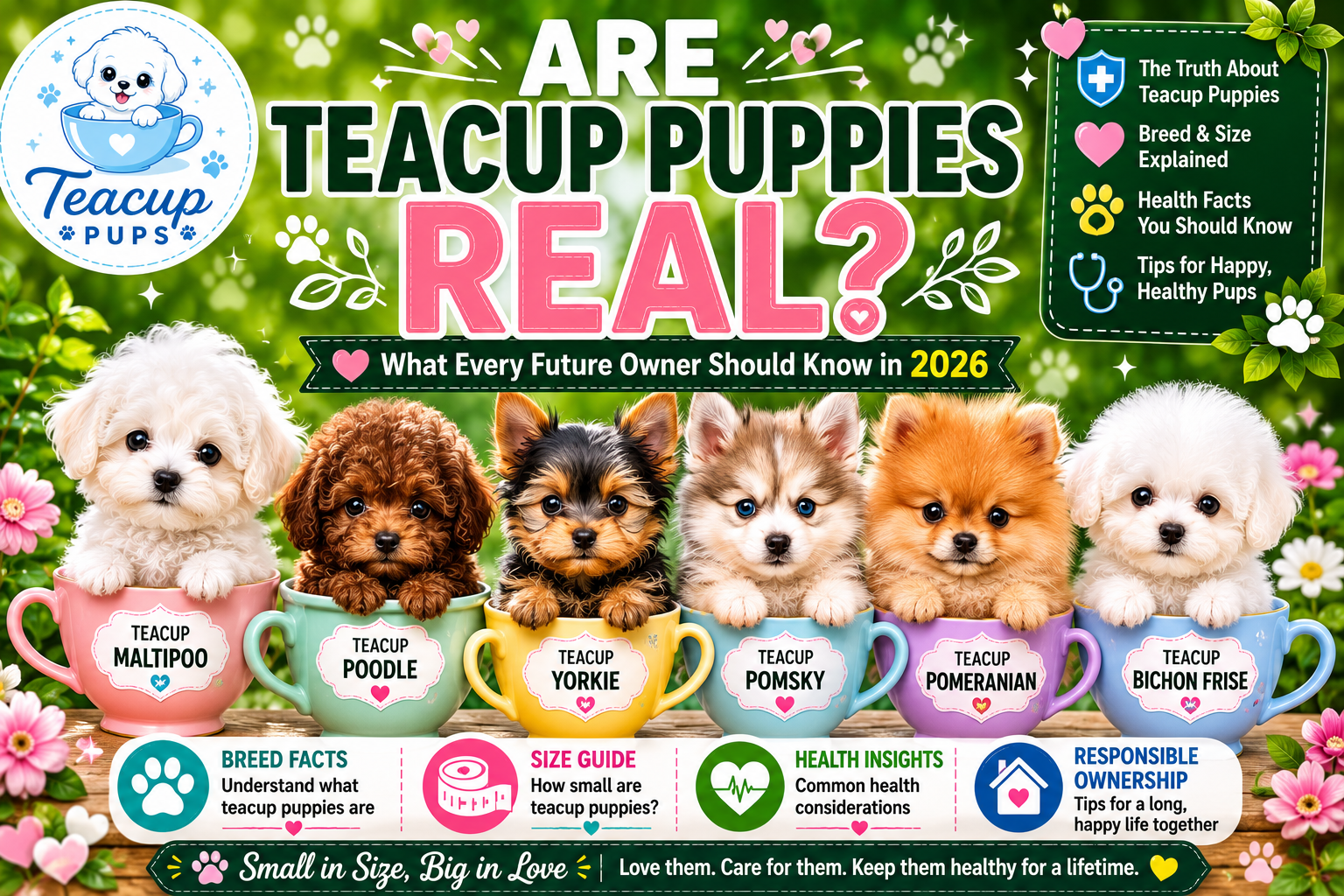
Popular examples include Pomeranians, Yorkies, Chihuahuas, Poodles, Maltipoos, and Bichon Frises.
3. How small do teacup puppies get?
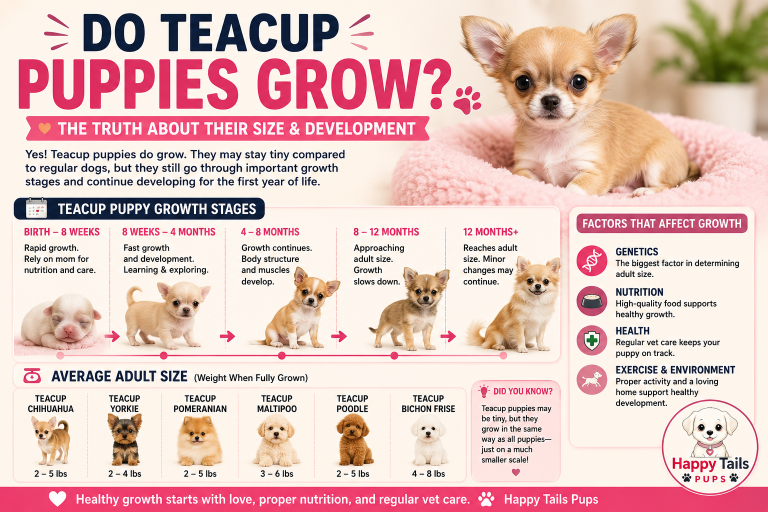
Many adult teacup dogs weigh between 2 and 5 pounds, depending on breed and genetics.
4. Are teacup puppies healthy?
Many are healthy, but their small size can increase the risk of certain health concerns and injuries.
5. Do teacup puppies stay tiny forever?
They remain much smaller than average dogs but still grow from puppyhood into adulthood.
6. Are teacup puppies good for apartments?
Yes. Their small size often makes them excellent companions for apartment and condo living.