
Do Teacup Puppies Stay Small?
Do Teacup Puppies Stay Small? What Every Future Owner Should Know
If you are considering bringing home a teacup puppy, one of the first questions you are likely to ask is whether these tiny dogs actually stay small throughout their lives. The answer is yes, but understanding how teacup puppies grow is important before making any assumptions about their adult size. Many people mistakenly believe that a teacup puppy will remain the exact same size it was when they first brought it home, while others assume that the term “teacup” guarantees a specific adult weight. In reality, teacup puppies go through the same developmental stages as every other dog. They grow, mature, gain weight, develop stronger muscles and bones, and gradually transition from puppyhood into adulthood. The difference is that their growth occurs on a much smaller scale than larger breeds. A Teacup Chihuahua, Teacup Yorkie, Teacup Maltipoo, Teacup Pomeranian, Teacup Poodle, or Teacup Bichon Frise may start life weighing only a pound or two and eventually mature into an adult weighing just a few pounds more. While they do grow, they remain significantly smaller than standard-sized dogs throughout their lives. As a breeder, I often explain to prospective owners that genetics, breeding practices, nutrition, overall health, and daily care all influence a puppy’s final size. Understanding these factors can help you set realistic expectations, provide proper care, and appreciate the unique qualities that make teacup puppies such beloved companions. Whether you are researching teacup puppies for the first time or preparing to welcome one into your family, learning how these tiny dogs grow and what determines their adult size will help you become a more informed and responsible owner. For additional puppy care information, breed guides, and available puppies, families can visit Happy Tails Pups at https://happytailspups.com/.
Do Teacup Puppies Stay Small Forever?
One of the biggest misconceptions surrounding teacup puppies is that they never grow. In reality, every healthy puppy experiences growth and development throughout its first year of life. The difference is that teacup breeds mature into exceptionally small adults rather than reaching the size commonly associated with standard dogs. A Teacup Chihuahua that weighs one pound as a young puppy may eventually reach three or four pounds as an adult. Similarly, a Teacup Maltipoo may grow from two pounds at eight weeks of age to six pounds when fully mature. While these increases may seem small compared to larger breeds, they represent significant growth for a dog of that size. As breeders, we often remind prospective owners that teacup puppies remain small compared to other dogs, but they do not remain the exact same size throughout life. Their bodies continue developing, their muscles strengthen, their coats mature, and their personalities evolve just like any other dog. Understanding this distinction helps owners appreciate the natural growth process while still recognizing that teacup breeds remain among the smallest companion dogs available today.
Why Teacup Puppies Remain Smaller Than Standard Dogs
The primary reason teacup puppies stay so small is genetics. Every dog’s size is influenced by inherited traits passed down from parents, grandparents, and previous generations. Responsible breeders spend years studying bloodlines and selecting breeding pairs that consistently produce healthy, small puppies while maintaining desirable breed characteristics. Unlike larger breeds that may continue growing for more than a year, teacup puppies are genetically programmed to mature into much smaller adults. This does not mean they are incomplete versions of their breed. A Teacup Yorkie is still a Yorkshire Terrier, and a Teacup Pomeranian is still a Pomeranian. They simply inherit genes that limit their overall growth. Responsible breeding focuses on maintaining health, temperament, and structural soundness while preserving the small size that many owners find appealing.
Genetics Play the Biggest Role
When prospective puppy owners ask how large their puppy will become, genetics is always the first factor breeders evaluate. Looking at the size of the parents often provides valuable insight into what owners can expect. Puppies born to generations of naturally small adults are more likely to remain tiny throughout life. While no breeder can guarantee an exact adult weight, established bloodlines provide important clues about future size. Genetics influence everything from body structure and bone density to coat type and overall growth rate, making them the single most important factor in determining whether a puppy remains exceptionally small as an adult.
Selective Breeding for Smaller Size
Selective breeding has played an important role in developing teacup-sized companions. Over many generations, breeders have carefully chosen smaller adults that demonstrate excellent health, sound temperaments, and desirable breed characteristics. The goal is not simply to create the smallest dog possible but to produce healthy companions that retain the personality and appearance associated with the breed. Ethical breeding programs prioritize health and quality over extreme size, ensuring puppies have the best possible opportunity to live long and healthy lives.
How Much Do Teacup Puppies Grow?
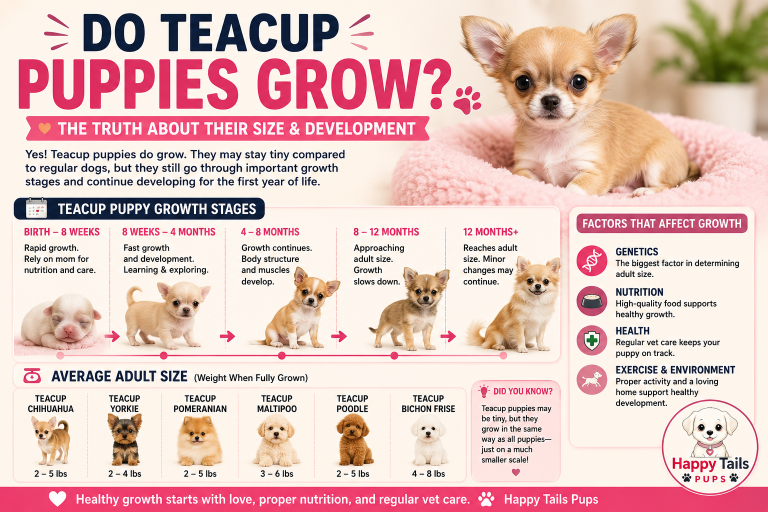
Although teacup puppies remain small throughout their lives, they still experience important growth milestones during puppyhood. The most significant growth period usually occurs between birth and six months of age. During this stage, puppies rapidly develop stronger bones, healthier muscles, and more mature immune systems. Owners often notice visible changes in weight, height, and overall body structure. Because these dogs start life at such a tiny size, even gaining a few pounds can represent substantial development. For example, a puppy weighing one pound at eight weeks old may eventually mature into a healthy adult weighing four or five pounds. While this may seem like a small increase compared to larger breeds, it actually represents several times the puppy’s original body weight. Healthy growth is a positive sign that a puppy is receiving proper nutrition, veterinary care, and environmental support.
Growth During the First Six Months
The first six months are often the most important period of development for a teacup puppy. During this time, puppies learn social skills, explore their surroundings, and build the foundation for lifelong health. Proper nutrition is particularly important because small breeds have fast metabolisms and require nutrient-rich diets to support growth. Puppies that receive high-quality food, regular veterinary checkups, and appropriate exercise generally develop more consistently than those that do not. Owners should expect steady weight gain during this period and understand that growth is a normal and necessary part of healthy development.
Growth Between Six and Twelve Months
As puppies move beyond six months of age, growth usually begins to slow. Many teacup breeds continue gaining small amounts of weight and muscle while refining their adult body structure. During this stage, puppies often become more confident, coordinated, and physically mature. By the time most teacup puppies reach their first birthday, they have achieved nearly all of their adult size. While minor changes in muscle tone and body composition may continue, major growth spurts are generally complete.
Average Adult Size of Popular Teacup Breeds
One of the reasons teacup puppies are so appealing is their ability to remain remarkably small throughout adulthood. However, adult size varies depending on breed, genetics, and overall health. Understanding these differences can help prospective owners choose a puppy that best fits their lifestyle and expectations.
Teacup Chihuahua
The Teacup Chihuahua is often considered one of the smallest dog varieties available. Most healthy adults weigh between two and five pounds and remain compact enough to be comfortably carried throughout life. Despite their tiny size, they are known for their bold personalities and strong loyalty to their owners.
Teacup Yorkie
Teacup Yorkshire Terriers typically reach an adult weight of two to four pounds. Their silky coats, intelligent personalities, and affectionate nature make them one of the most popular teacup breeds. Although small, they often display remarkable confidence and energy.
Teacup Maltipoo
Teacup Maltipoos usually weigh between three and six pounds as adults. Their combination of intelligence, friendliness, and adaptability makes them excellent companions for families, singles, and seniors alike. Many owners appreciate their affectionate personalities and teddy bear appearance.
Teacup Pomeranian
Teacup Pomeranians generally mature between two and five pounds. Their fluffy coats, fox-like faces, and outgoing personalities have made them one of the most recognizable teacup breeds in the world.
Teacup Poodle
Teacup Poodles commonly weigh between two and five pounds when fully grown. Their exceptional intelligence and trainability make them highly desirable companions. They are often favored by owners seeking a small dog with strong learning abilities.
Teacup Bichon Frise
Teacup Bichon Frises typically weigh between four and eight pounds as adults. Their cheerful personalities, soft white coats, and affectionate nature make them wonderful companions for many households.
Can a Teacup Puppy Become Bigger Than Expected?
One of the most common questions breeders receive is whether a teacup puppy might eventually outgrow its estimated size. The honest answer is yes. Although experienced breeders can provide educated predictions based on bloodlines and parental size, no breeder can guarantee an exact adult weight. Genetics can be unpredictable, and puppies sometimes inherit traits from earlier generations that influence their final size. This is why responsible breeders focus on health, temperament, and quality rather than promising unrealistic size guarantees. A healthy puppy that grows slightly larger than expected is often far preferable to an unhealthy puppy bred solely for extreme smallness.
Factors That Affect a Teacup Puppy’s Final Size
Several factors contribute to a puppy’s eventual adult size. While genetics remains the most influential factor, other aspects of care and development also play important roles.
Nutrition
Proper nutrition supports healthy growth and development. Puppies require balanced diets that provide essential vitamins, minerals, proteins, and healthy fats. Feeding a high-quality diet formulated for toy breeds helps puppies achieve their full genetic potential while supporting overall health.
Health
Underlying medical conditions can affect growth and development. Regular veterinary care helps identify potential issues early and ensures puppies remain on track for healthy development.
Exercise
Appropriate exercise contributes to healthy muscle development and weight management. While teacup puppies do not require extensive physical activity, daily play and gentle exercise help maintain fitness and overall wellness.
Environment
A safe and stress-free environment also contributes to healthy growth. Puppies that receive proper socialization, consistent care, and positive experiences often develop more confidently and maintain better overall health.
Do Teacup Puppies Stay Small Compared to Other Dogs?
Absolutely. Even after reaching adulthood, teacup puppies remain significantly smaller than most dog breeds. A fully grown Teacup Chihuahua or Teacup Yorkie may weigh only a fraction of what a medium or large breed dog weighs. This dramatic size difference is one of the primary reasons many people choose teacup breeds. Their compact size makes them ideal companions for apartment living, travel, and households seeking a smaller pet. However, owners should remember that their tiny size also makes them more vulnerable to injuries and accidents than larger dogs.
What Owners Should Know About Caring for Tiny Adult Dogs
Owning a teacup dog comes with unique responsibilities. Their small size may be appealing, but it also requires thoughtful care and attention throughout their lives.
Safe Living Environment
Because teacup dogs are delicate, creating a safe environment is essential. Pet stairs, soft bedding, and supervision around larger animals can help prevent injuries. Owners should also discourage jumping from high furniture and rough play.
Proper Nutrition
Small dogs often have fast metabolisms and benefit from carefully balanced diets designed for toy breeds. Maintaining a healthy weight is particularly important because even a small amount of excess weight can place additional strain on a tiny body.
Regular Veterinary Care
Routine veterinary visits help monitor overall health and detect potential concerns early. Preventive care, dental cleanings, vaccinations, and parasite prevention all contribute to a longer, healthier life.
For additional educational information about small-breed care, owners can visit the American Kennel Club (AKC).
Final Thoughts
So, do teacup puppies stay small? Yes, they do. While every healthy teacup puppy grows and develops during its first year of life, these dogs remain remarkably small compared to standard-sized breeds. Their adult size is largely determined by genetics, although nutrition, health, and proper care also influence development. Understanding how teacup puppies grow helps future owners set realistic expectations and provide the best possible care. Whether you are considering a Teacup Chihuahua, Teacup Yorkie, Teacup Maltipoo, Teacup Pomeranian, Teacup Poodle, or Teacup Bichon Frise, one thing is certain: these tiny companions may be small in size, but they are often enormous in personality, affection, and loyalty.
For more puppy care resources, breed information, and available puppies, visit Happy Tails Pups at https://happytailspups.com/.
Frequently Asked Questions
1. Do teacup puppies stay small forever?
Yes. They grow during puppyhood but remain significantly smaller than standard dog breeds as adults.
2. At what age do teacup puppies stop growing?
Most teacup puppies reach their adult size between eight and twelve months of age.
3. How big does a teacup puppy get?
Most teacup breeds weigh between two and eight pounds as adults depending on breed and genetics.
4. Can a teacup puppy become larger than expected?
Yes. Genetics can sometimes cause a puppy to mature slightly larger than estimated.
5. Which teacup breed stays the smallest?
Teacup Chihuahuas and Teacup Yorkies are often among the smallest teacup breeds.
6. Are teacup puppies healthy?
Many teacup puppies live healthy, happy lives when responsibly bred and provided with proper nutrition, veterinary care, and a safe environment.