Happy Tails Puppies Complete Guide to Raising a Happy, Healthy Dog
Happy Tails Puppies Complete Guide to Raising a Happy, Healthy Dog
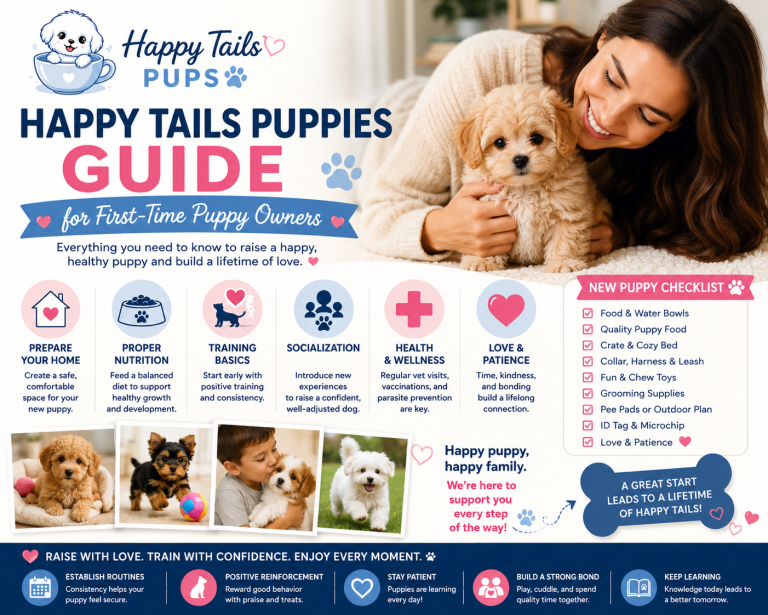
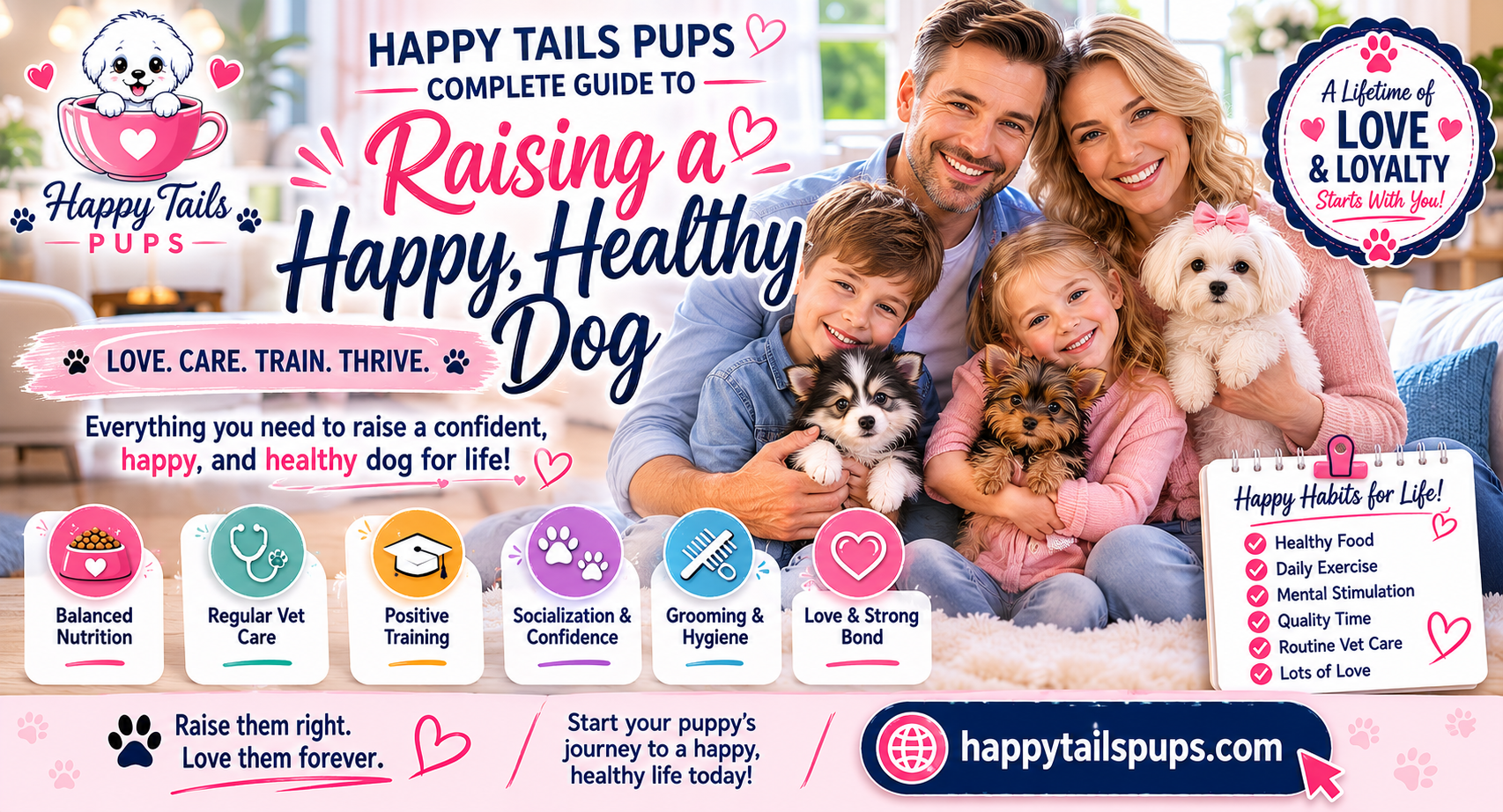
Every dog owner dreams of raising a happy healthy dog that enjoys a long, active, and fulfilling life. While every puppy is unique, there are certain principles that consistently contribute to good health, positive behavior, and strong family bonds. From proper nutrition and veterinary care to training, socialization, and exercise, the choices you make during puppyhood can influence your dog’s well-being for years to come.
Raising a happy healthy dog is about more than providing food and shelter. Dogs thrive when they receive physical care, mental stimulation, emotional support, and consistent guidance. Whether you’re welcoming your very first puppy or adding another companion to your family, understanding these essential areas of care can help your puppy grow into a confident and well-adjusted adult dog.
At Happy Tails Pups, we believe that education is one of the most powerful tools available to dog owners. This complete guide explains everything you need to know about raising a happy healthy dog in 2026 and beyond.
Why Raising a Happy Healthy Dog Starts Early
The first few months of a puppy’s life are incredibly important.
During puppyhood, dogs develop:
- Physical strength
- Social skills
- Behavioral habits
- Confidence
- Learning abilities
Experiences during these early months often influence behavior and health throughout adulthood.
A strong start creates the foundation for lifelong success.
Proper Nutrition for a Happy Healthy Dog
Nutrition is one of the most important aspects of dog ownership.
A balanced diet supports:
- Healthy growth
- Strong bones
- Muscle development
- Immune system function
- Energy levels
Choose Age-Appropriate Food
Puppies have different nutritional needs than adult dogs.
Puppy-specific food is formulated to support rapid growth and development.
Monitor Portions
Overfeeding can contribute to unhealthy weight gain.
Maintaining a healthy weight helps support long-term wellness.
Provide Fresh Water
Clean water should always be available.
Hydration is essential for overall health.
Consult your veterinarian regarding nutritional recommendations for your specific breed and puppy.
Veterinary Care and Preventive Health
Regular veterinary care is critical for raising a happy healthy dog.
Preventive healthcare helps identify concerns early and supports long-term wellness.
Wellness Exams
Routine checkups allow veterinarians to monitor development and answer questions.
Vaccinations
Vaccinations help protect puppies from certain preventable diseases.
Parasite Prevention
Preventive care may include protection against:
- Fleas
- Ticks
- Heartworms
- Intestinal parasites
Dental Health
Oral health contributes to overall health and comfort.
Routine veterinary care should remain a priority throughout your dog’s life.
Training Builds Confidence and Trust
Training is about much more than obedience.
Effective training helps dogs:
- Understand expectations
- Build confidence
- Improve communication
- Strengthen family bonds
Start Early
Puppies begin learning immediately.
Use Positive Reinforcement
Reward-based training encourages desired behaviors.
Keep Sessions Short
Short, consistent sessions are often more effective than lengthy lessons.
Training creates structure and helps puppies become well-adjusted family companions.
Socialization Helps Create a Happy Healthy Dog
Socialization is one of the most important investments you can make in your puppy’s future.
Proper socialization involves introducing your puppy to:
- New people
- Different environments
- Household sounds
- Friendly dogs
- Everyday experiences
Positive exposure helps puppies develop confidence and adaptability.
Dogs that receive appropriate socialization often handle new situations more comfortably.
Exercise and Physical Activity
Every dog needs regular exercise.
Physical activity supports:
- Healthy weight management
- Muscle development
- Joint health
- Mental stimulation
- Emotional well-being
Walking
Daily walks provide exercise and exploration opportunities.
Playtime
Interactive games encourage activity and strengthen bonds.
Breed-Specific Activities
Some breeds require more exercise than others.
Understanding your breed’s activity requirements helps prevent boredom and behavioral issues.
Mental Stimulation Is Just as Important
A happy healthy dog needs both physical and mental exercise.
Mental enrichment can include:
- Puzzle toys
- Training exercises
- Interactive games
- New experiences
- Problem-solving activities
Mental stimulation helps reduce boredom and encourages healthy behavior.
Dogs enjoy learning and benefit from regular challenges.
Creating a Safe Home Environment
Safety is a key component of responsible dog ownership.
Remove Household Hazards
Common hazards include:
- Toxic plants
- Electrical cords
- Cleaning chemicals
- Small choking hazards
Provide a Comfortable Resting Area
Dogs need quiet spaces where they can relax and feel secure.
Maintain Consistent Routines
Predictable schedules help dogs feel safe and confident.
A safe environment supports both physical and emotional wellness.
Grooming for Health and Comfort
Grooming does more than improve appearance.
Regular grooming helps:
- Maintain skin health
- Reduce matting
- Monitor for abnormalities
- Promote comfort
Brushing
Coat care requirements vary by breed.
Nail Maintenance
Overgrown nails can affect mobility and comfort.
Ear Care
Routine checks help maintain ear health.
Bathing
Bathing schedules depend on breed and lifestyle.
Regular grooming contributes to overall wellness.
Building a Strong Emotional Bond
Dogs are highly social animals.
Strong relationships provide emotional security and improve quality of life.
Ways to strengthen your bond include:
- Spending quality time together
- Positive training experiences
- Daily walks
- Play sessions
- Consistent routines
A strong bond benefits both the dog and the owner.
Common Mistakes That Can Affect Dog Health
Avoiding common mistakes can improve long-term outcomes.
Inconsistent Training
Mixed expectations often create confusion.
Lack of Exercise
Insufficient activity can contribute to behavioral issues.
Poor Nutrition
Diet plays a major role in overall wellness.
Skipping Veterinary Visits
Preventive care should never be neglected.
Limited Socialization
Dogs benefit from positive exposure to new experiences.
Awareness of these challenges helps owners make better decisions.
Why Responsible Ownership Matters
According to the American Kennel Club, responsible dog ownership includes providing proper nutrition, healthcare, exercise, training, and lifelong commitment.
Educational resource:
https://www.akc.org/expert-advice/lifestyle/responsible-dog-owner/
Responsible owners focus on:
- Physical wellness
- Emotional health
- Safety
- Training
- Socialization
- Preventive healthcare
These efforts contribute significantly to raising a happy healthy dog.
Breed Differences and Individual Needs
Every dog is unique.
Factors that influence care include:
Breed
Different breeds have different exercise and grooming needs.
Age
Requirements change throughout life stages.
Personality
Individual temperaments vary.
Lifestyle
Your daily routine affects your dog’s experiences.
Understanding these differences helps owners provide appropriate care.
Resources Available at Happy Tails Pups
At Happy Tails Pups, we provide educational resources to help families succeed throughout their puppy ownership journey.
Visit: Happy Tails Pups
You’ll find:
- Breed guides
- Puppy care articles
- Training resources
- Grooming information
- Health and wellness tips
Our goal is to help families build strong, lasting relationships with their dogs.
Long-Term Wellness for a Happy Healthy Dog
Wellness is an ongoing process.
Healthy habits developed during puppyhood often continue throughout adulthood.
Long-term wellness includes:
- Routine veterinary care
- Proper nutrition
- Regular exercise
- Mental stimulation
- Grooming
- Training
- Emotional support
Consistency in these areas supports a better quality of life.
Conclusion
Raising a happy healthy dog requires commitment, education, patience, and love. From nutrition and preventive healthcare to socialization, training, exercise, and emotional bonding, every aspect of care contributes to your dog’s overall well-being. While no two dogs are exactly alike, the principles outlined in this guide can help owners create a strong foundation for lifelong happiness and health.
At Happy Tails Pups, we are committed to helping families succeed through educational resources and responsible puppy ownership guidance. By investing time and effort into your dog’s development, you’ll be rewarded with years of companionship, loyalty, and unforgettable memories.
Frequently Asked Questions
1. What is the most important factor in raising a happy healthy dog?
A combination of nutrition, veterinary care, training, exercise, and socialization is essential.
2. How much exercise does a dog need?
Exercise needs vary depending on breed, age, and individual energy levels.
3. Why is socialization important?
Socialization helps dogs develop confidence and adapt to new situations.
4. How often should dogs visit the veterinarian?
Veterinary schedules vary, but routine wellness visits are important throughout life.
5. What role does mental stimulation play?
Mental enrichment helps reduce boredom and encourages healthy behavior.
6. Where can I learn more about puppy care?
Visit Happy Tails Pups and the American Kennel Club for educational resources and guidance.