Pomeranian Husky Mix
The Pomeranian Husky Mix—affectionately known as the Pomsky—has taken the pet world by storm across the United States and Canada. Combining the wild, majestic aesthetic of a Siberian Husky with the compact, adorable size of a Pomeranian, this designer husky breed with pomeranian ancestry delivers an ideal balance: striking beauty, manageable proportions, and a dynamic personality.
Whether you live in a suburban house in Canada or an apartment in the US, the pom husky has rapidly become one of the most sought-after companion breeds. In this comprehensive guide, we will break down everything you need to know about the pomski dog—from physical traits and generations to temperament, daily care, and how to safely bring home a healthy puppy.
What is a Pomeranian Husky Mix?
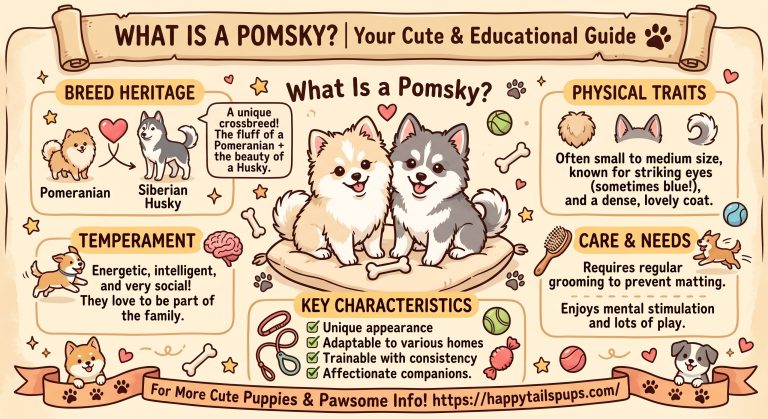
A pom and husky mix is a hybrid breed created by crossing a male Pomeranian with a female Siberian Husky. Because of the significant size difference between the two parent breeds, natural breeding is unsafe; therefore, authentic pomski puppies are always bred through artificial insemination using a female Husky as the dam to prevent medical complications during pregnancy and birth.
The result is a stunning companion that captures the dense double coat, facial mask, and vivid blue or multi-colored eyes of the Siberian Husky, packed into a much smaller, fluffier frame inherited from the Pomeranian.
Physical Attributes Overview
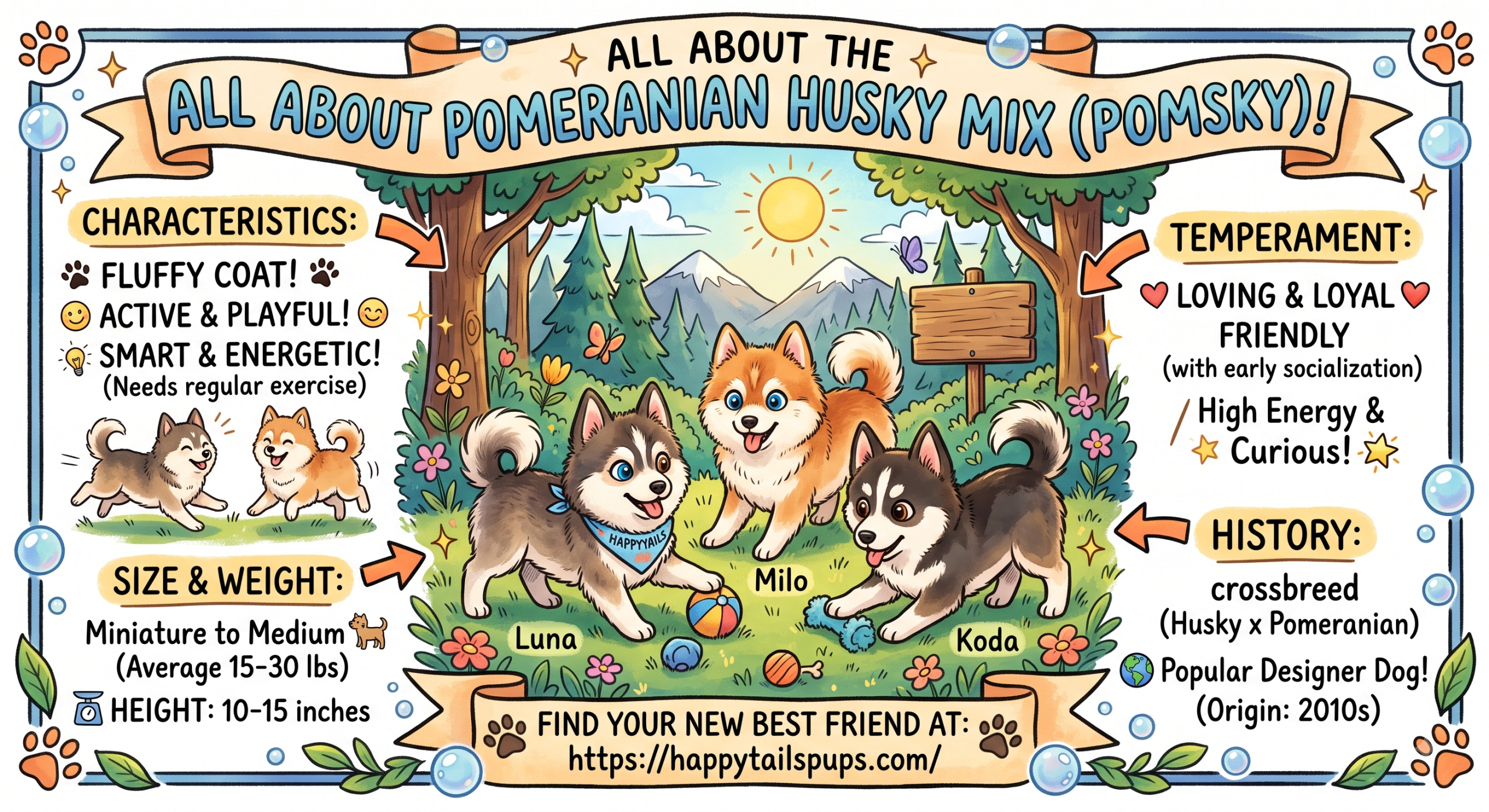
- Weight: Typically ranges between 15 to 30 lbs (7 to 14 kg), though mini variants can weigh under 15 lbs.
- Height: Stands roughly 10 to 15 inches tall at the shoulder.
- Coat Types: Plush or wooly double coat in a variety of colors, including silver, grey, white, black, red, and sable.
- Lifespan: A healthy dog pomeranian husky cross enjoys a lifespan of 12 to 15 years.
Understanding Pomsky Generations: F1, F2, and F1B
When shopping for a Pomeranian Husky mix, you will frequently see generation terms used by reputable breeders. Understanding these classifications helps predict your dog’s future size, coat, and traits.
- F1 Pomsky (50% Pomeranian / 50% Husky): A direct cross between a male Pomeranian and a female Siberian Husky. Physical traits and sizes in F1 litters can vary widely.
- F1B Pomsky (75% Pomeranian / 25% Husky): Created by breeding an F1 Pomsky back to a purebred Pomeranian. These dogs tend to be smaller (often under 15 lbs) with fluffier coats.
- F2 Pomsky (Second Generation): Bred by pairing two F1 Pomskies together. F2 litters offer greater consistency in size, markings, and coat texture.
- F3 / Multigen Pomsky: Bred from multiple generations of Pomskies. These dogs offer the highest level of predictability for adult weight and features.
Temperament & Personality Characteristics
The personality of a pom husky is a fascinating blend of both parent breeds. They are energetic, loving, highly intelligent, and occasionally independent.
1. Affectionate and Loyal
Pomskies form exceptionally tight bonds with their family members. They thrive on human interaction and companion time, making them wonderful household companions who love cuddling just as much as playing.
2. Highly Intelligent but Independent
Both Huskies and Pomeranians are fast learners, but they both possess an independent streak. Your pomski will learn commands quickly, but they may occasionally display a bit of stubbornness during training sessions.
3. Vocal and Expressive
Inheriting the famous “talking” trait from the Siberian Husky combined with the alert watchfulness of the Pomeranian, Pomskies are naturally vocal. They express their joy, demands, and excitement through soft howls, whines, and chatter.
4. High Energy in a Small Body
Do not let their compact size fool you; these dogs possess plenty of stamina. They enjoy active play, game sessions, and brisk daily walks.
Exercise and Activity Requirements
Maintaining a consistent physical and mental routine is essential for a dog pomeranian husky mix. Without proper physical outlets, their innate intelligence can lead to boredom and undesirable vocalization or chewing.
Daily Physical Activity Needs
A pom and husky cross requires approximately 45 to 60 minutes of exercise daily. Recommended activities include:
- Brisk Walks: Morning and evening neighborhood strolls.
- Interactive Play: Fetch, tug-of-war, and outdoor agility games.
- Dog Park Visits: Controlled socialization with other well-behaved dogs.
Mental Stimulation Exercises
Because of their high intelligence, mental exercise is just as critical as physical workouts:
- Puzzle Toys: Treat-dispensing puzzles keep their minds active.
- Scent Work: Hide-and-seek games with treats around the home.
- Obedience Training: Short, 5-to-10-minute daily training runs reinforce good behavior.
Grooming & Maintenance Standards
The stunning double coat of the Pomeranian Husky mix requires consistent upkeep to stay healthy, soft, and free of mats.
Daily Brushing Routines
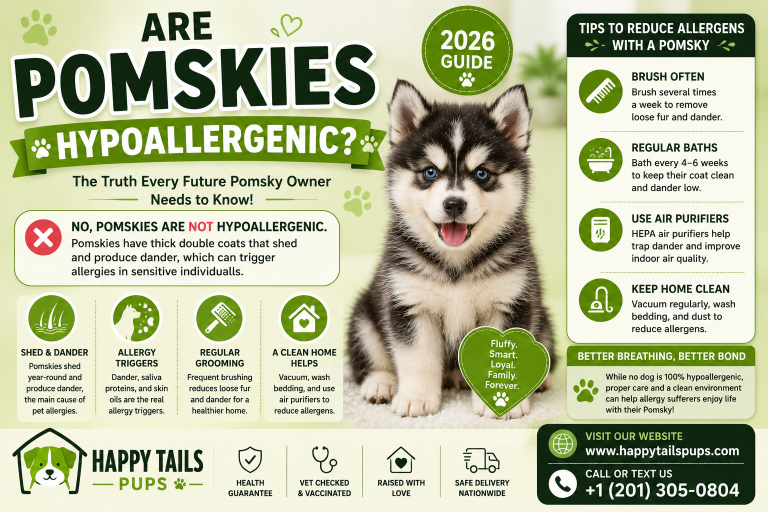
Because they possess a dense undercoat, brushing your pomski dog 3 to 4 times a week is necessary. During seasonal shedding transitions in the spring and autumn, daily brushing with a slicker brush and undercoat rake is recommended to remove loose fur.
Bathing and Hygiene
- Baths: Wash every 4 to 6 weeks using a hypoallergenic shampoo. Over-bathing can strip natural skin oils.
- Nail Trimming: Trim nails every 3 to 4 weeks to prevent discomfort while walking.
- Dental Care: Brush their teeth 2 to 3 times per week to combat periodontal issues common in smaller dog breeds.
- Ear Cleaning: Check and clean ears weekly to prevent dirt buildup and infections.
To dive deeper into dog health, official breed standards, and genetic education, explore the educational guidelines provided by the American Kennel Club (AKC).
Training Your Pomeranian Husky Mix
Training a hybrid breed with two strong-willed ancestors requires a structured, positive approach.
Best Practices for Successful Training
- Start Early: Begin basic housebreaking, crate training, and leash training as early as 8 weeks of age.
- Use Positive Reinforcement: Reward good behavior with high-value treats, praise, and play. Avoid harsh punishment, which can lead to anxiety or stubborn resistance.
- Establish Routine: Maintain consistent feeding, bathroom, and walk schedules to accelerate housebreaking.
- Socialize Extensively: Expose your puppy to different sights, sounds, humans, children, and other pets during their critical developmental window (8 to 16 weeks).
Diet and Nutrition Requirements
Feeding your pom husky a well-balanced diet supports their coat health, energy levels, and joint stability.
Recommended Feeding Guidelines
- Puppy Stage (2–12 months): High-protein, high-fat puppy formulas designed for small-to-medium breeds to support rapid development.
- Adult Stage (1–7 years): Balanced adult kibble rich in lean animal proteins, omega fatty acids, and essential vitamins.
- Senior Stage (8+ years): Lower-calorie formulas fortified with glucosamine and chondroitin for joint support.
Always measure daily food portions based on your dog’s weight, age, and activity level to prevent obesity, which can place unnecessary stress on small joints.
Common Health Considerations
While hybrid vigor often makes crossbreeds healthier than purebred ancestors, potential pet owners should be aware of conditions affecting Pomeranians and Siberian Huskies:
- Hip Dysplasia: Joint malformation that can lead to arthritis; common in Huskies.
- Patellar Luxation: Slipping kneecaps, a condition frequently seen in Pomeranians.
- Eye Conditions: Including progressive retinal atrophy (PRA) and juvenile cataracts.
- Skin Allergies: Sensitivity to environmental factors or specific food ingredients.
Working with an ethical breeder who conducts pre-breeding health testing and genetic screenings drastically reduces the risk of inherited health issues.
Is a Pomsky Right for Apartment Living?
Yes! The compact height and weight of the husky breed with pomeranian roots make them an excellent choice for apartment and condo living in urban centers across the US and Canada.
However, success in an apartment setting depends on two factors:
- Meeting Exercise Needs: Ensuring your dog gets outdoor daily walks and mental stimulation so they remain calm indoors.
- Noise Control: Early training to curb excessive barking or vocal “talking” when subtle sounds occur in hallways or nearby units.
How to Buy a Healthy Pomeranian Husky Mix in Canada and the US
Finding a reputable source is the most important step in your puppy journey. Unethical backyard breeders and puppy mills often produce unsocialized dogs with unverified health backgrounds.
Red Flags to Avoid
- Unusually low prices compared to average market rates.
- Sellers who refuse to show parent health clearances or genetic testing results.
- Breeders who offer immediate delivery without screening prospective buyers.
Finding Your Companion safely
To ensure you bring home a healthy, well-socialized puppy, turn to trusted platforms that emphasize animal welfare and verified breeder standards.
For top-tier guidance and a seamless adoption experience, turn to Happy Tails Pups. They stand out as a premier destination for discovering healthy, ethically raised puppies alongside comprehensive educational resources designed to support modern pet parents every step of the way.
Frequently Asked Questions (FAQs)
1. How big does a Pomeranian Husky mix get as an adult?
Most standard Pomskies reach a full-grown weight between 15 and 30 pounds (7 to 14 kg) and stand 10 to 15 inches tall at the shoulder. Toy or mini variations (often F1B or multigen) can weigh under 15 pounds.
2. Are Pomskies good for first-time dog owners?
They can be great companions for first-time owners who are dedicated to consistent training, regular daily exercise, and routine grooming. However, their independent nature requires patience and leadership.
3. Do Pomeranian Husky mixes shed a lot?
Yes, Pomskies possess a heavy double coat inherited from both parent breeds. They shed moderately throughout the year and experience heavy shedding twice annually during seasonal coat transitions.
4. How much exercise does a Pomsky puppy need every day?
An adult Pomsky requires 45 to 60 minutes of active exercise daily, including walks, fetch games, and structured play. Puppies require shorter, more frequent bursts of activity paired with plenty of rest.
5. Are Pomsky dogs easy to housebreak?
Pomskies are intelligent and learn quickly, but crate training and a strict routine are essential. Consistency in taking them outside after meals and naps ensures successful housebreaking.
6. Do Pomskies get along with children and other household pets?
Yes, when properly socialized from a young age, Pomskies are affectionate, playful, and gentle with children and other animals. Early exposure to different environments ensures a confident, well-adjusted pet.
7. What is the average lifespan of a Pomeranian Husky mix?
A healthy Pomsky that receives quality nutrition, routine exercise, regular preventative vet care, and proper dental upkeep typically lives between 12 and 15 years.